Prices
Is this tour for me?
Get In Touch
Highlights
Walk the entire Le Puy Camino through France’s most historic landscapes
Walk the full Le Puy Camino from Le Puy-en-Velay to Saint-Jean-Pied-de-Port on one seamless journey.
Experience one of Europe’s most iconic pilgrimages through medieval villages and historic trails.
Discover highlights like Conques and Moissac, rich in history, architecture, and Camino tradition.
Cross diverse landscapes from volcanic plateaus to the foothills of the Pyrenees.
Walk the complete Le Puy Camino on a self-guided journey across France, from Le Puy-en-Velay to Saint-Jean-Pied-de-Port. Over 39 days, follow the historic GR65 through medieval villages, Romanesque churches, and ever-changing landscapes—from volcanic plateaus to the foothills of the Pyrenees. With luggage transfers, pre-booked accommodations, and detailed navigation provided, you can focus fully on the experience of this iconic pilgrimage while enjoying comfort and flexibility each day.
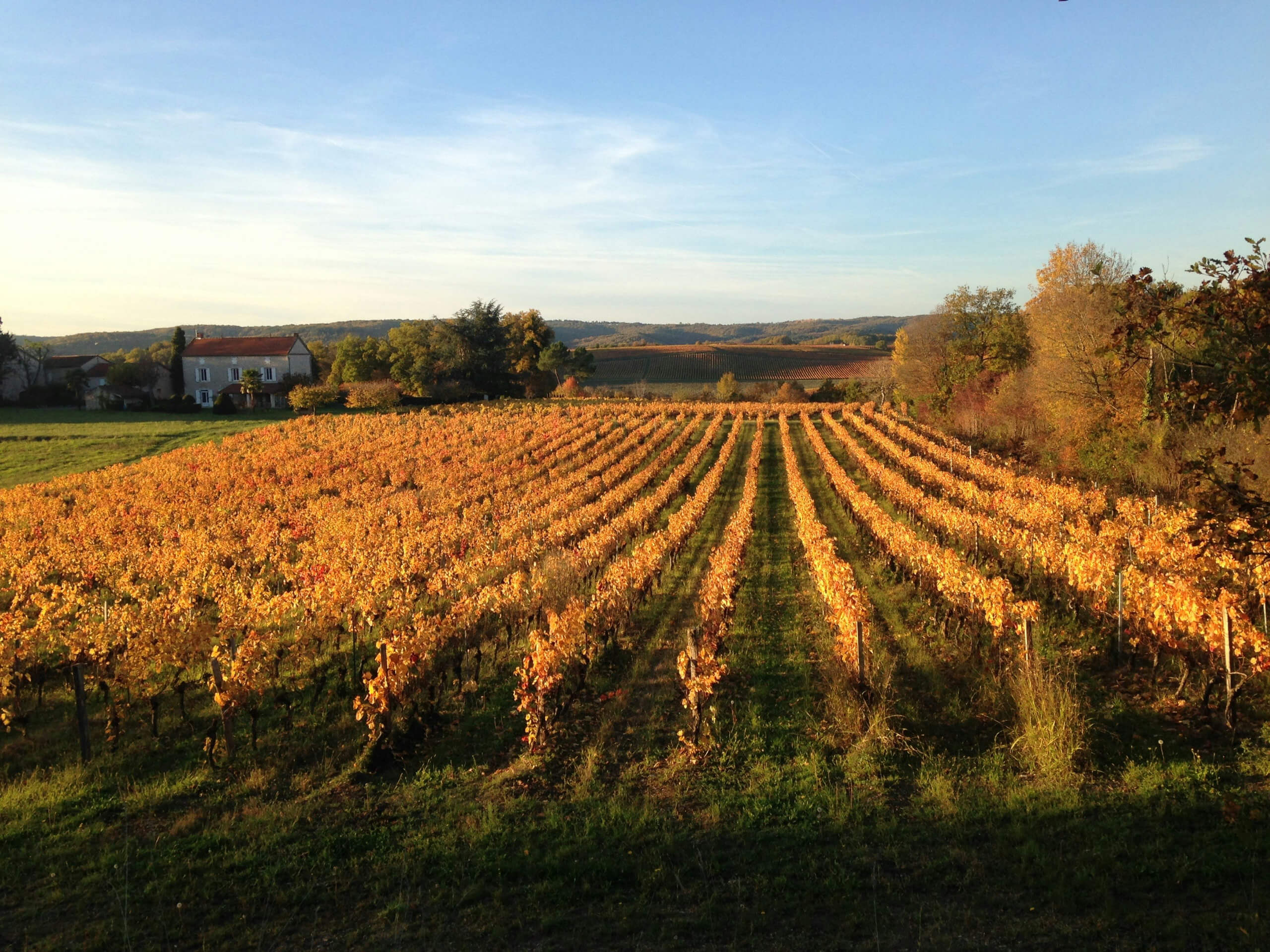
Along the way, you pass through diverse landscapes and historic regions, including remote plateaus, river valleys, and vineyard-covered countryside. Pilgrims encounter beautiful medieval villages, Romanesque churches, and renowned pilgrimage towns such as Conques and Moissac, each offering a glimpse into centuries of Camino tradition.
This tour combines all sections of the Le Puy Camino into one continuous journey through the cultural heart of rural France. Walking the full route reveals the regional diversity and historic heritage that make the French Camino one of Europe’s most celebrated long-distance walks.
For travellers who prefer to complete the route in stages, the Le Puy Camino is commonly divided into six sections:
Stage 1: Le Puy-en-Velay to Aumont-Aubrac
Stage 2: Aumont-Aubrac to Conques
Stage 3: Conques to Cahors
Stage 4: Cahors to Lectoure
Stage 5: Lectoure to Aire-sur-l’Adour
Stage 6: Aire-sur-l’Adour to Saint-Jean-Pied-de-Port
These stages can also be combined or adjusted with additional rest days depending on your schedule and walking preferences. If you would like to customize your itinerary, contact us to plan your ideal Le Puy Camino journey.
Walk the complete Le Puy Camino on a self-guided journey across France, from Le Puy-en-Velay to Saint-Jean-Pied-de-Port. Over 39 days, follow the historic GR65 through medieval villages, Romanesque churches, and ever-changing landscapes—from volcanic plateaus to the foothills of the Pyrenees. With luggage transfers, pre-booked accommodations, and detailed navigation provided, you can focus fully on the experience of this iconic pilgrimage while enjoying comfort and flexibility each day.
Along the way, you pass through diverse landscapes and historic regions, including remote plateaus, river valleys, and vineyard-covered countryside. Pilgrims encounter beautiful medieval villages, Romanesque churches, and renowned pilgrimage towns such as Conques and Moissac, each offering a glimpse into centuries of Camino tradition.
This tour combines all sections of the Le Puy Camino into one continuous journey through the cultural heart of rural France. Walking the full route reveals the regional diversity and historic heritage that make the French Camino one of Europe’s most celebrated long-distance walks.
For travellers who prefer to complete the route in stages, the Le Puy Camino is commonly divided into six sections:
Stage 1: Le Puy-en-Velay to Aumont-Aubrac
Stage 2: Aumont-Aubrac to Conques
Stage 3: Conques to Cahors
Stage 4: Cahors to Lectoure
Stage 5: Lectoure to Aire-sur-l’Adour
Stage 6: Aire-sur-l’Adour to Saint-Jean-Pied-de-Port
These stages can also be combined or adjusted with additional rest days depending on your schedule and walking preferences. If you would like to customize your itinerary, contact us to plan your ideal Le Puy Camino journey.
Read more
Walk the Complete Le Puy Camino Itinerary
Day 1 Arrival in Le Puy-en-Velay
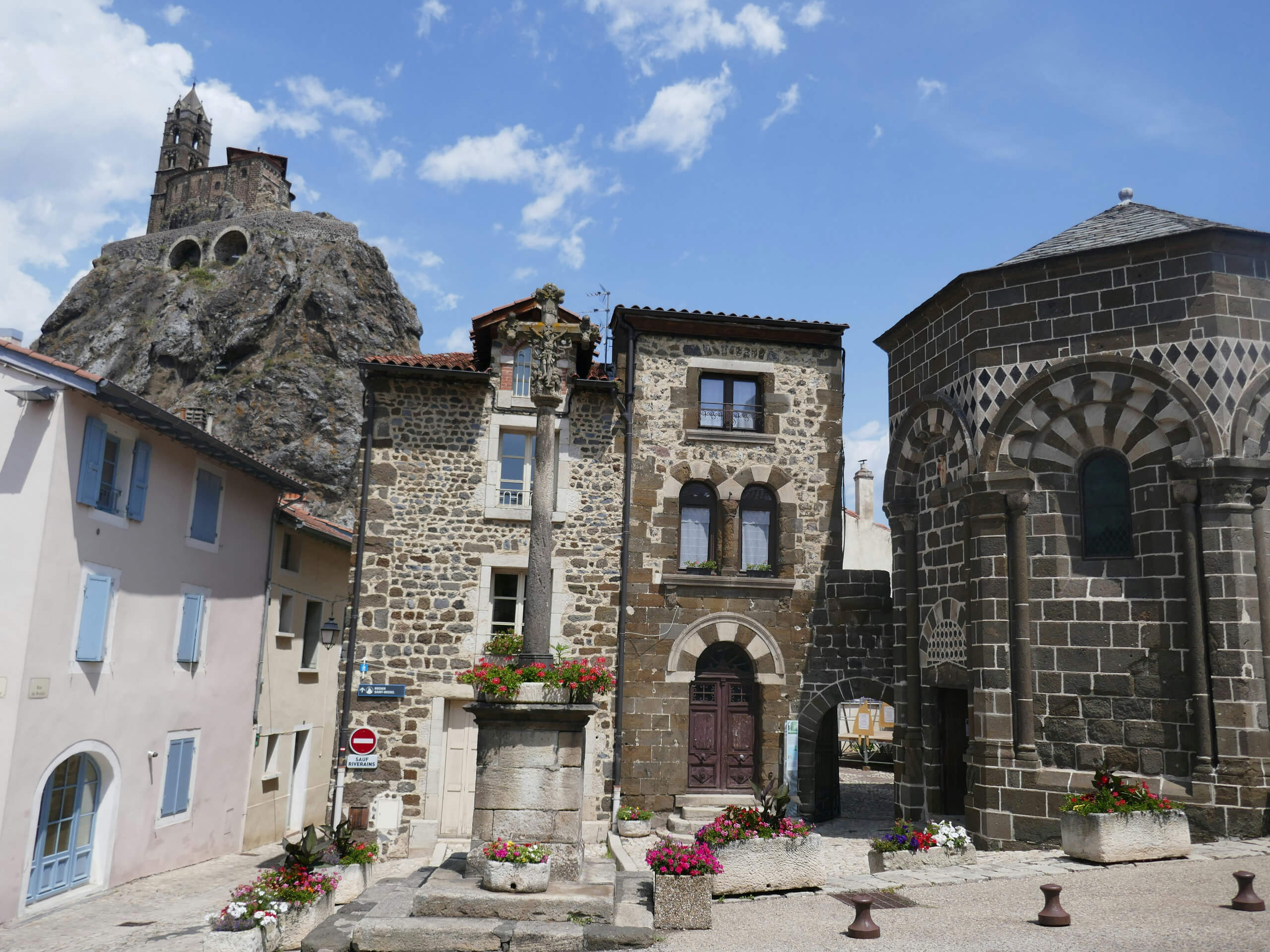
The Via Podiensis, or Le Puy Camino, commences in the magnificent setting of Le Puy-en-Velay. Nestled between the ancient volcanic peaks of the Auvergne and the verdant Rhône-Alpes valley, this venerable city serves as a grand introduction to the pilgrimage ahead.
Exploring the cobbled corridors of the medieval old town offers a profound sense of heritage, where centuries of history remain remarkably well-preserved. For a definitive perspective of the landscape, a walk to the iconic monument of “Notre Dame de France” provides sweeping panoramic views over the city’s unique skyline and the dramatic volcanic topography that defines this region.
Overnight Location: Hotel in Le Puy-en-Velay
Distance: None
Meals: None
Day 2 Leaving Le Puy-en-Velay for the Hills of the Velay Massif
Embrace the spirit of the pilgrimage by departing from the cathedral doors and descending the grand staircase toward the Rue des Tables. After passing the historic fountain, the route weaves through the heart of the city via Rue Raphael and the Place du Plot, eventually following the Rue Saint Jacques and Rue des Capucins as you leave Le Puy-en-Velay behind.
The day’s walk traverses the lush mountains of the Velay Massif, where the trail faithfully adheres to the ancient pilgrim path as far as La Roche. Ascending from 625m to 966m, you will cross a vast plateau leading toward the Mountains of Velay, eventually joining an old trail originating from Ramourouscle near Saint Christophe. The stage offers magnificent scenery at every turn before concluding in the charming, hilltop village of Saint-Privat-d’Allier.
Overnight Location: B&B in St Privat D’Allier
Distance: 23 km, 573m ascent, 390m descent
Meals: Breakfast, dinner
Day 3 Challenging Walk to Saugues
Today’s walk covers fewer kilometres, but the steady ascents and descents make it the most demanding stage of this first section. The effort is rewarded with sweeping views across the Velay Massif as you follow the Compostelle trail through charming villages and hamlets such as Rochegude and Combriaux.
From Monistrol, the path climbs steeply toward Montaure, located on the edge of the Gévaudan plateau. The ascent gains around 420 metres as you reach this high point along the route. Up to Montaure, you follow the ancient pilgrim’s trail closely before the historic path branches off to the right.
A newer route now continues toward Saugues, offering a more pleasant walking experience while remaining just as direct. By the end of the day, you arrive in Saugues, where you will stay overnight.
Overnight Location: B&B in Saugues
Distance: 19 km, 791m ascent, 694m descent
Meals: Breakfast, dinner
Day 4 Crossing into Lozère on the Way to Les Faux
Today is a longer day on the trail. You may find small “farm cafés” in Contaldes and Chazeaux, and there is also a café-restaurant in Chanaleilles located just off the route. However, as opening hours are not guaranteed, it is best to purchase supplies in Saugues before setting out. Near the hotel you will find a patisserie, as well as a supermarket and another bakery along the way out of town.
Your walk leads you to Le Sauvage, a historic farming area set high on a hill and dating back to the time of the Templars. Continuing onward, you reach the Saint-Roch Chapel, where you enter the Lozère department. From here, you complete the day’s walk in the village of Les Faux.
Overnight Location: Hotel in Les Faux
Distance: 28 km, 620m ascent, 620m descent
Meals: Breakfast, dinner
Day 5 Across the Aubrac Plateau to Aumont-Aubrac
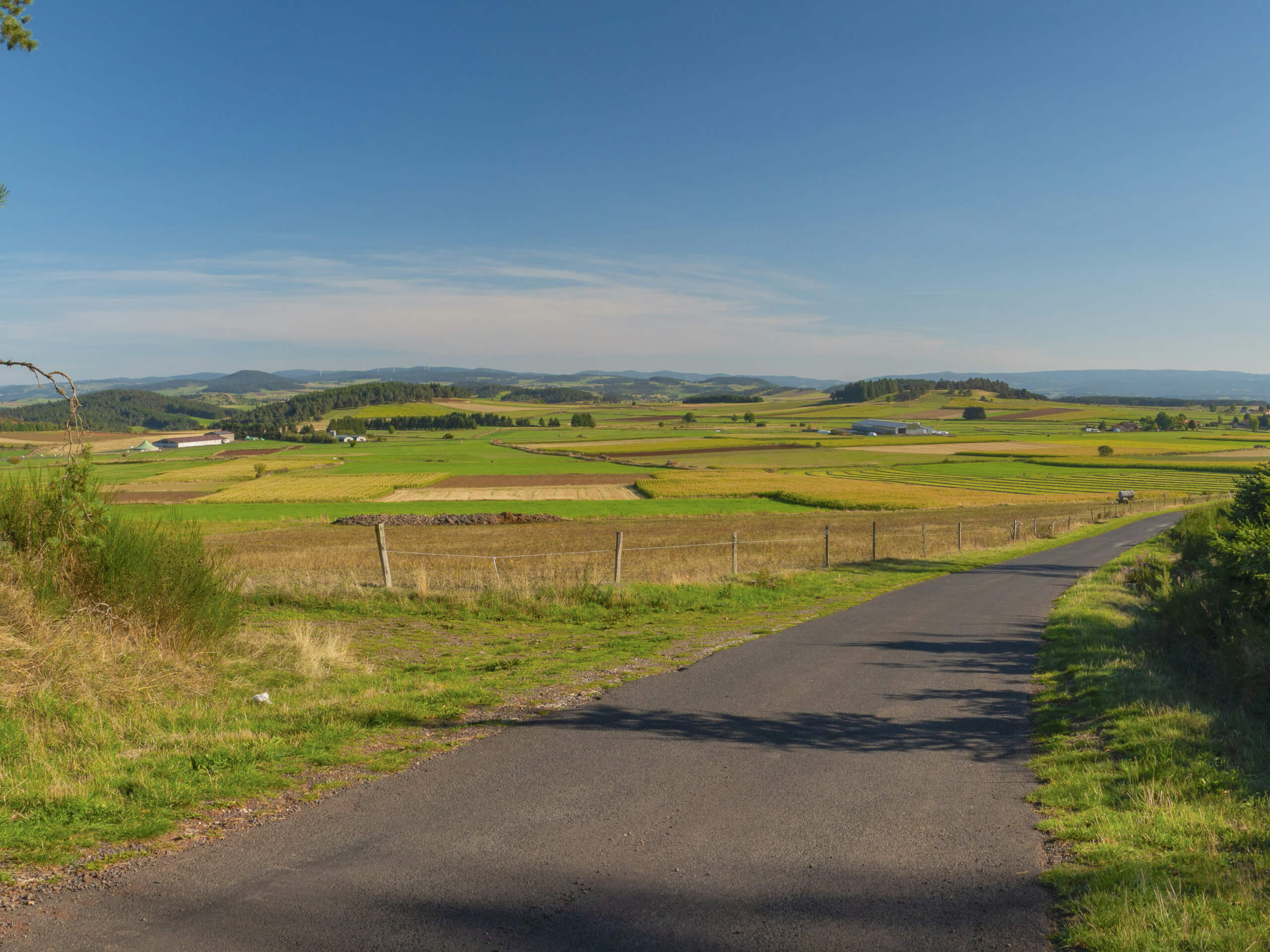
Today you follow a gently hilly and pastoral route, crossing small rivers as the trail leads through forests, open fields, and quiet villages. Along the way, you walk across the volcanic and granitic landscapes of the Aubrac plateau.
Your walk finishes in the town of Aumont-Aubrac. The historic centre was once surrounded by ramparts and still preserves several houses from the 16th and 17th centuries with sculpted stone façades. Just up the road, you can also visit a Laguiole outlet store, where this well-known French family company sells handmade knives and other items such as pens.
Overnight Location: Hotel in Aumont-Aubrac
Distance: 21 km, 383m ascent, 292m descent
Meals: Breakfast, dinner
Day 6 Across the Aubrac Moorlands to Nasbinals
Today, and continuing into tomorrow, the landscape changes noticeably as you reach the higher sections of the GR65. Leaving behind the gentler woods and fields of earlier stages, you enter a wilder, windswept moorland landscape.
The terrain is shaped by peatlands, winding streams, drystone walls, and large scattered boulders. Some of these rocks were deposited by glacial melt after the last Ice Age, while others were moved by people long ago. Along the way, you also pass small fields that reflect earlier times of land division and rural hardship.
In winter, this rugged landscape becomes a cross-country skiing destination. Today, you cross this open terrain before arriving in the village of Nasbinals, where you will spend the night.
Overnight Location: Hotel in Nasbinals
Distance: 26 km, 392m ascent, 264m descent
Meals: Breakfast, dinner
Day 7 From the Aubrac Highlands to Saint-Chély-d’Aubrac
Today marks your final day walking through the high grasslands and traditional transhumance landscapes of the Aubrac region. Along the way, you pass the highest point of the entire route between Le Puy-en-Velay and Saint-Jean-Pied-de-Port, reaching 1,366 metres just before the historic village of Aubrac.
After this point, the trail gradually begins to descend, leaving the wilder highlands behind as you head toward gentler terrain. Your day finishes in the pleasant village of Saint-Chély-d’Aubrac, where you will stay for the night.
Overnight Location: Hotel in Saint-Chély-d’Aubrac
Distance: 16 km, 207m ascent, 583m descent
Meals: Breakfast, dinner
Day 8 Descending into the Lot Valley
Leaving Saint-Chély-d’Aubrac, you begin your descent toward the beautiful Lot Valley. Along the way, you pass through Saint-Côme-d’Olt, a village officially recognized as one of Les Plus Beaux Villages de France. Situated along the Lot River, its historic quarter retains a distinctive medieval character.
Overnight Location: Hotel in Saint-Côme-d’Olt
Distance: 17 km, 248m ascent, 702m descent
Meals: Breakfast, dinner
Day 9 Along the Lot Valley to Estaing
Today’s walk continues through the Lot Valley, where more historic and scenic landmarks appear along the route. Along the way, you pass the Chapelle Saint-Pierre of Bessuéjouls, one of the oldest chapels on the trail, known for its 11th-century chapel located within the bell tower.
Your day ends in the village of Estaing, where its impressive castle can be seen from afar welcoming pilgrims as they approach. As you wander through its medieval streets, the village offers a strong sense of its long history.
Overnight Location: Hotel in Estaing
Distance: 20 km, 426m ascent, 478m descent
Meals: Breakfast, dinner
Day 10 Walk to the Hilltop Village of Golinhac
Today’s route is relatively straightforward. While some sections of the trail can be muddy, much of the walk follows quiet tarmac roads. The main climbs come early in the day, after which you continue across a plateau with wide views over the surrounding hills as you make your way toward Golinhac.
This is a shorter stage, and you may arrive in Golinhac by lunchtime, where you will find a bar and restaurant. If you plan to start later in the day, it is recommended to pick up supplies in Estaing before setting out, where there is a small supermarket and a bakery.
Overnight Location: Hotel in Golinhac
Distance: 14 km, 510m ascent, 180m descent
Meals: Breakfast, dinner
Day 11 Walking to the Historic Village of Conques
Before setting out, you may wish to ask your accommodation to prepare a packed lunch or pick up supplies from a local shop. Along the route, both Espeyrac and Senergues have small shops and bars, though opening hours may be limited.
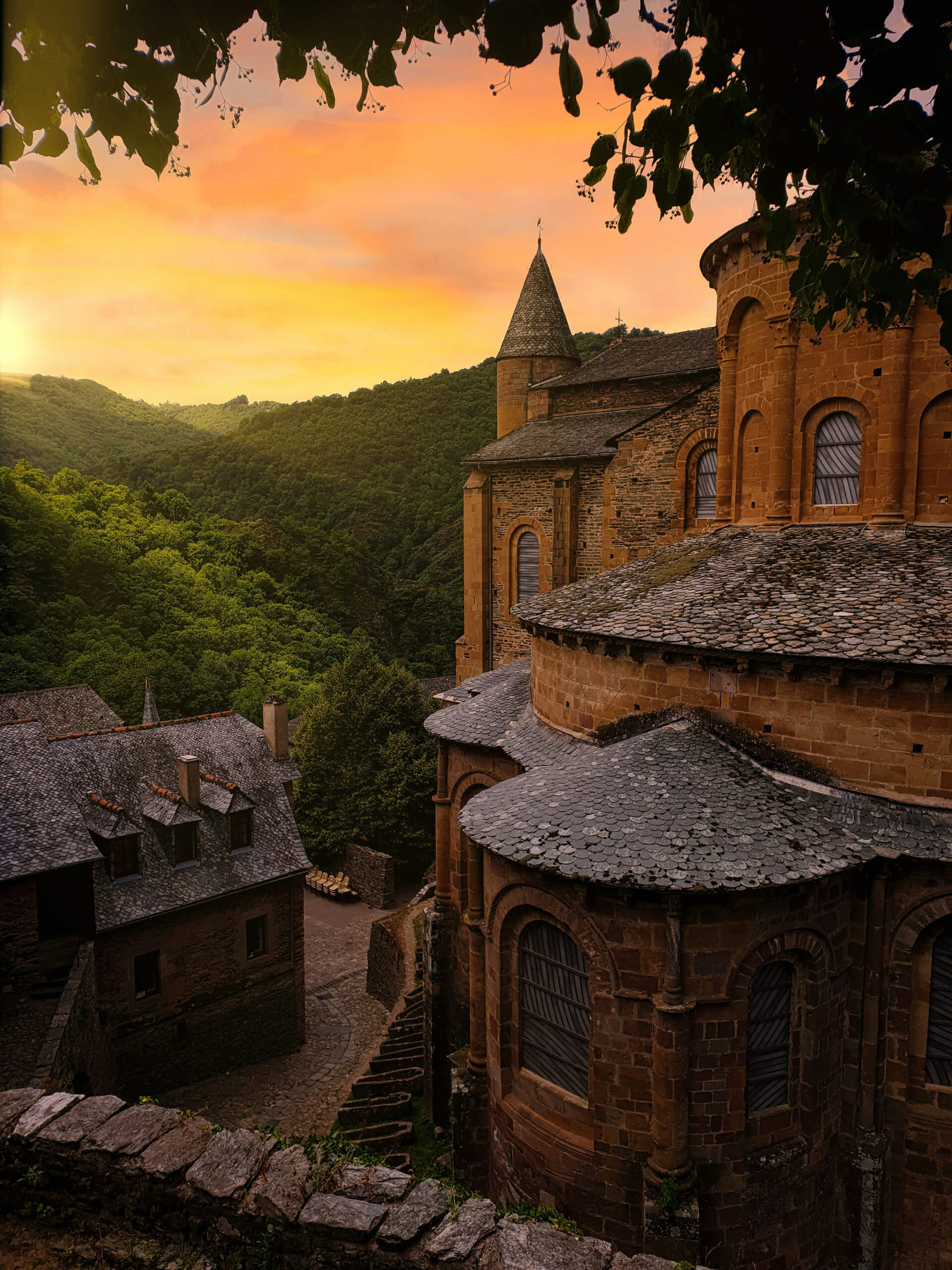
From Espeyrac, the GR65 crosses the minor rivers Daze and Tayrac before reaching the historic pilgrims’ village of Senergues, known for its fortified château and charming church. The trail then climbs onto the rolling plateau of Campeux before continuing toward one of the most notable destinations along the Way of St James—the town of Conques.
Today’s walk is relatively straightforward, with around 80% of the route following quiet tarmac roads. Some trail sections can be muddy, and the final descent into Conques is steep and stony, though it does not last long.
Overnight Location: B&B in Conques
Distance: 21 km
Meals: Breakfast, dinner
Day 12 From Conques to Decazeville
You leave the charming village of Conques by descending toward the Dourdou River and crossing its medieval bridge. From there, the trail begins a gradual climb to the Chapel of Sainte Foy. A small spring beside the chapel is said to have water believed to cure tired eyes.
As you continue, you are rewarded with beautiful views back toward Conques as the village slowly disappears behind you. By the end of the day, you arrive in Decazeville, where you will spend the night.
Overnight Location: Gîte in Decazeville
Distance: 24 km, 671m ascent, 753m descent
Meals: Breakfast
Day 13 Toward the Historic Town of Figeac
Today you notice the landscape gradually change as you leave the Aveyron region and enter the Lot. The first part of the day involves a steady climb, leading to a scenic viewpoint where you can look back over Decazeville.
Overnight Location: Hotel in Figeac
Distance: 24 km, 500m ascent, 500m descent
Meals: Breakfast
Day 14 Climbing to the Plateau toward Saint-Chels
Leaving Figeac, the route climbs steadily onto a high plateau, making today a day with notable ascent. The effort is rewarded with impressive views across the surrounding landscape, which becomes more rugged as you progress along the trail.
Overnight Location: B&B in Saint-Chels
Distance: 24.5 km, 412m ascent, 231m descent
Meals: Breakfast, dinner
Day 15 Through Forests to Cajarc
Today’s walk leads mostly through forested landscapes with less climbing than previous days. Along the route, you pass several ancient dolmens, a type of megalithic tomb, as well as traditional stone shelters unique to the region. You will also see historic stone crosses, including the oldest found along the entire route.
Your day ends in the charming village of Cajarc, set on the banks of the Lot River and surrounded by striking limestone cliffs.
Overnight Location: Hotel in Cajarc
Distance: 11.7 km, 109m ascent, 338m descent
Meals: Breakfast
Day 16 Across the Causses du Quercy
Today’s walk leads through pleasant woodlands and the agricultural landscapes of the Causses du Quercy. The term causses refers to the limestone plateaus that characterize this part of the Massif Central.
This is a relatively easy day on the trail, giving you plenty of time to enjoy the walk and take in the surrounding scenery.
Overnight Location: B&B in Limogne-en-Quercy
Distance: 19 km, 353m ascent, 203m descent
Meals: Breakfast, dinner
Day 17 Through the Forests of the Causses du Quercy
Today’s walk is mostly flat, following woodland tracks as you continue across the Parc naturel régional des Causses du Quercy. The forests here are vast and crossed by a network of branching paths, so following the trail markers will help keep you on route.
Along the way toward Mas-de-Vers, you pass more dolmens and traditional stone structures that reflect the long history of this region. If the opportunity arises, you may also wish to try one of the area’s most celebrated delicacies: the black truffle.
Overnight Location: Hotel in Lalbenque
Distance: 22 km, 230m ascent, 385m descent
Meals: Breakfast, dinner
Day 18 Walking to the Historic City of Cahors
Today’s stage begins in Lalbenque / Mas-de-Vers and leads to the beautiful city of Cahors, set within a bend of the Lot River. The gently undulating route passes through cultivated countryside and several small villages along the way.
As you walk, you will see many traditional stone shepherd shelters known as caselles, structures that are unique to this region. By the end of the day, you arrive in Cahors, a city recognized with the “Villes d’art et d’histoire” label for its rich cultural heritage. Here you can admire landmarks such as the Valentré Bridge, a UNESCO World Heritage Site, and the Cathedral of Saint-Étienne de Cahors, an important historic monument.
Overnight Location: Hotel in Cahors
Distance: 18 km, 170m ascent, 310m descent
Meals: Breakfast
Day 19 Climbing from Cahors to Lascabanes
Leaving Cahors, the day begins with a demanding climb that offers excellent views back over the city in the valley below. The route then continues onto the limestone plateau of the Causses.
Along the way, you pass through the village of Labastide-Marnhac before continuing toward the small village of Lascabanes. Here you will find a charming chapel. Lascabanes was home to a pilgrims’ hospital in the 15th century, and the village church still offers a daily pilgrim blessing at 6pm.
Overnight Location: B&B in Lascabanes (Lendou en Quercy)
Distance: 23 km, 414m ascent, 355m descent
Meals: Breakfast, dinner
Day 20 Walking to Lauzerte
Today’s walk includes several ascents and descents as you make your way toward Lauzerte. The landscape gradually opens up, with fewer woodlands and more farmland and cultivated fields along the route.
By the end of the day, you arrive in the beautiful hilltop village of Lauzerte, officially recognized as one of Les Plus Beaux Villages de France. Located in the heart of the Chasselas appellation and the production area of the Melons du Quercy, the surrounding countryside is shaped by limestone plateaus and valleys. Throughout the seasons, the landscape changes colour with orchards, sunflowers, maize fields, vineyards, and lavender.
Overnight Location: Hotel in Lendou en Quercy
Distance: 25 km, 616m ascent, 593m descent
Meals: Breakfast, dinner
Day 21 Easy Walk to Moissac
Today is one of the easiest stages of the journey as you make your way toward Moissac along quiet countryside tracks. The route leads through woodlands, cultivated fields, and vineyards along the way.
Overnight Location: Hotel in Lauzerte
Distance: 28 km, 469m ascent, 611m descent
Meals: Breakfast, dinner
Day 22 Along the Garonne River to Auvillar
Today’s walk follows the Garonne River for much of the day. Along the way, you will enjoy excellent views over the valley from the hamlet of Boudou before the route crosses the canal at Malause.
From there, the trail climbs toward the town of Auvillar, another picturesque village recognized as one of Les Plus Beaux Villages de France. Small but beautifully preserved, the village is surrounded by ancient fortified walls with gateways leading into the centre. One of these entrances passes beneath the 17th-century clock tower, built on the site of a former drawbridge that once controlled access to the village. The tower itself is distinctive, constructed from alternating layers of white stone and the region’s characteristic red brick.
Overnight Location: B&B in Auvillar
Distance: 22 km, 334m ascent, 300m descent
Meals: Breakfast, dinner
Day 23 Into the Farmlands of Le Gers
Today you leave the Lot department and enter the rolling farmlands of Le Gers. The route leads through peaceful countryside before reaching the charming village of Flamarens, home to a castle dating back to the 13th century. You will spend the night here.
Overnight Location: B&B in Flamarens
Distance: 14 km, 364m ascent, 275m descent
Meals: Breakfast, dinner
Day 24 Walking to the Historic Town of Lectoure
Today’s walk leads you through scenic countryside as you make your way to the town of Lectoure. Set on a hilltop overlooking the Lomagne region, Lectoure is one of the oldest towns in the Gers, with origins dating back to the Gallo-Roman period.
Designated a “Town of Art and History” by the French authorities, Lectoure is known for its rich heritage. Highlights include the town’s ramparts, the Albinhac Tower, the Bourreau Tower, the former castle of the Counts of Armagnac, the Diane Fountain, the Church of Saint-Gervais-Saint-Protais, and the Church of the Holy Spirit, also known as the Chapel of Saint-Gény. Lectoure also lies within the Armagnac region, famous for its renowned brandy.
Overnight Location: Hotel in Lectoure
Distance: 19 km, 274m ascent, 299m descent
Meals: Breakfast, dinner
Day 25 Walking to the Village of La Romieu
Today’s walk is a pleasant stroll through woodland and peaceful countryside. After leaving Lectoure, you cross the River Gers before continuing through rural landscapes toward La Romieu.
Located between Agen to the north and Auch to the south, La Romieu has long been an important stop for pilgrims travelling from Le Puy or Rocamadour toward Santiago de Compostela. The village is officially recognized as one of Les Plus Beaux Villages de France and is also affectionately known as the “village of cats,” thanks to the many feline figures that can be seen throughout the village on windows, doors, and doorsteps.
Overnight Location: B&B in La Romieu
Distance: 18.5 km
Meals: Breakfast, dinner
Day 26 Walking to the Medieval Town of Condom
Today’s walk leads you to the medieval town of Condom. As you continue westward, vineyards become more common as the landscape gradually transitions toward the Bas Armagnac area. The countryside remains a patchwork of cultivated land, with fields of cereals, sunflowers, orchards, and vegetable crops.
Along the way, you pass La Chapelle Sainte-Germaine, a restored church that offers wide views over the surrounding countryside.
Overnight Location: B&B in Condom
Distance: 13 km
Meals: Breakfast, dinner
Day 27 Historic Walk to Montréal-du-Gers
Today’s stage from Condom is rich in history and notable architecture. Along the way, you may choose to take a short detour to Larressingle, a 13th-century fortified village located about one kilometre from the GR65 and recognized as one of Les Plus Beaux Villages de France.
Continuing onward, you pass the Pont d’Artigues and the Chapelle de Routgès, the oldest church in the region. After passing a castle along the route, you arrive in Montréal-du-Gers, a village known for its connection to the Armagnac vineyards and also classified as one of Les Plus Beaux Villages de France.
Overnight Location: B&B in Montréal-du-Gers
Distance: 17 km
Meals: Breakfast, dinner
Day 28 Across Vineyards to Eauze
Most of today’s walk is flat, crossing agricultural landscapes intersected by quiet country roads. The first part of the route passes vineyards and scenic countryside before reaching the hamlet of Lamothe.
From there, the trail descends into a valley before a steady climb that gradually leads you into Place d’Armagnac in the town of Eauze. In the 3rd century AD, Eauze became the capital of the Roman province of Novempopulania. In the centre of town, you can also visit the archaeology museum, which showcases the remains of the ancient Roman city of Elusa.
Overnight Location: Hotel in Eauze
Distance: 17 km
Meals: Breakfast
Day 29 Walking to Nogaro
Today’s walk leads through the vineyards of the Armagnac region as you make your way toward the town of Manciet. This small town has long been an important point along the Le Puy Way. During the Middle Ages, it served as a meeting place where pilgrims arriving from Auch joined those travelling along the Le Puy route.
Overnight Location: Hotel in Nogaro
Distance: 20.5 km
Meals: Breakfast
Day 30 Through Farmland to Barcelonne-du-Gers
Today’s walk leads mostly through farmland and fields of cereal crops, passing several attractive villages and small hamlets along the way. Toward the final part of the stage, vineyards become less common and the landscape gradually shifts to more wooded terrain with maritime pines, oaks, and chestnut trees. Much of the route follows quiet country roads with little traffic, mostly used by local farm vehicles.
Overnight Location: B&B in Barcelonne-du-Gers
Distance: 25 km
Meals: Breakfast, dinner
Day 31 Through Green Countryside to Miramont-Sensacq
Today’s walk leads through lush green countryside dotted with small hamlets and historic structures, including medieval chapels and traditional wash-houses known as lavoirs. As you continue along the route, the snow-capped peaks of the Pyrenees begin to appear in the distance as you enter the Pyrénées-Atlantiques department.
Along the way, you pass the impressive 11th-century Church of Miramont-Sensacq, once dedicated to Saint James. Your day ends in the village of Miramont-Sensacq, where you will spend the night.
Overnight Location: B&B in Miramont-Sensacq
Distance: 20 km, 416m ascent, 253m descent
Meals: Breakfast, dinner
Day 32 Through the Béarn Countryside to Fichous-Riumayou
Today the trail continues through the scenic Béarn region. With the Pyrenees visible to the south, the route crosses gently rolling hills and peaceful countryside.
Along the way, you pass the town of Arzacq-Arraziguet, a bastide town founded in the 11th century and known for its two central squares and traditional lavoirs. The trail also leads through several small villages, including Louvigny, as you continue across this rural landscape.
Overnight Location: B&B in Fichous-Riumayou
Distance: 26 km, 481m ascent, 437m descent
Meals: Breakfast, dinner
Day 33 Walking to Arthez-de-Béarn
Today’s walk leads first to Larreule, home to a Benedictine monastery, before continuing to the village of Uzan. Along the way, you can visit the rural Church of Sainte-Quitterie and a nearby stone fountain.
From Pomps, the trail continues toward Arthez-de-Béarn, a town known for its distinctive Basque architecture.
Overnight Location: Hotel in Arthez-de-Béarn
Distance: 19 km, 155m ascent, 205m descent
Meals: Breakfast, dinner
Day 34 Toward the Abbey of Sauvelade
Today’s stage leads through wooded landscapes, passing several churches and chapels along the way. The trail crosses quiet countryside before reaching the small village of Maslacq.
Continuing onward, you pass a sanctuary and arrive at Sauvelade, known for its former monastery and peaceful rural setting, where you will spend the night.
Overnight Location: B&B in Sauvelade
Distance: 20.5 km, 361m ascent, 390m descent
Meals: Breakfast, dinner
Day 35 Into the Basque Country
Today’s undulating trail leads through peaceful rural landscapes before reaching the town of Navarrenx, the first town in France to be fortified with Italian-style ramparts.
Continuing through the final stretches of the Béarnais countryside along this route, you cross small streams and follow paths through fields and woodland. Along the way, you pass a local pâté producer and Mongaston Castle before reaching the village of Lichos, the birthplace of Saint Grat, Bishop of Oloron. By the end of the day, you arrive in Aroue, having crossed into the Basque region of France.
Overnight Location: B&B in Aroue
Distance: 30 km, 431m ascent, 552m descent
Meals: Breakfast, dinner
Day 36 A Day Among Romanesque Churches
Along today’s route, you pass the Romanesque Church of Saint-Étienne in Aroue. If you wish, you can also take a short detour from the path to visit the Romanesque Church of Saint-Just in Olhaiby.
From the stele marked with the scallop shell, leave the main GR65 and follow the route toward Saint-Palais. Your accommodation is located slightly off the main trail, with Saint-Palais situated about 4.5 km north of the GR65, and this distance is included in today’s total.
Overnight Location: Hotel in Saint Palais
Distance: 24 km, 370m ascent, 577m descent
Meals: Breakfast, dinner
Day 37 Where the Camino Routes Meet
During today’s walk, you pass the Stèle de Gibraltar, the point where the Camino routes from across France converge. From here, the trail continues through gently rolling countryside before reaching the chapel of Soyarce, which offers impressive views toward the Pyrenees.
Soon after, you arrive in the village of Ostabat. Although small today, it was once an important stop for medieval pilgrims travelling along the Way of St James.
Overnight Location: Gîte in Ostabat-Asme
Distance: 10.5 km, 390m ascent, 390m descent
Meals: Breakfast, dinner
Day 38 Final Steps to Saint-Jean-Pied-de-Port
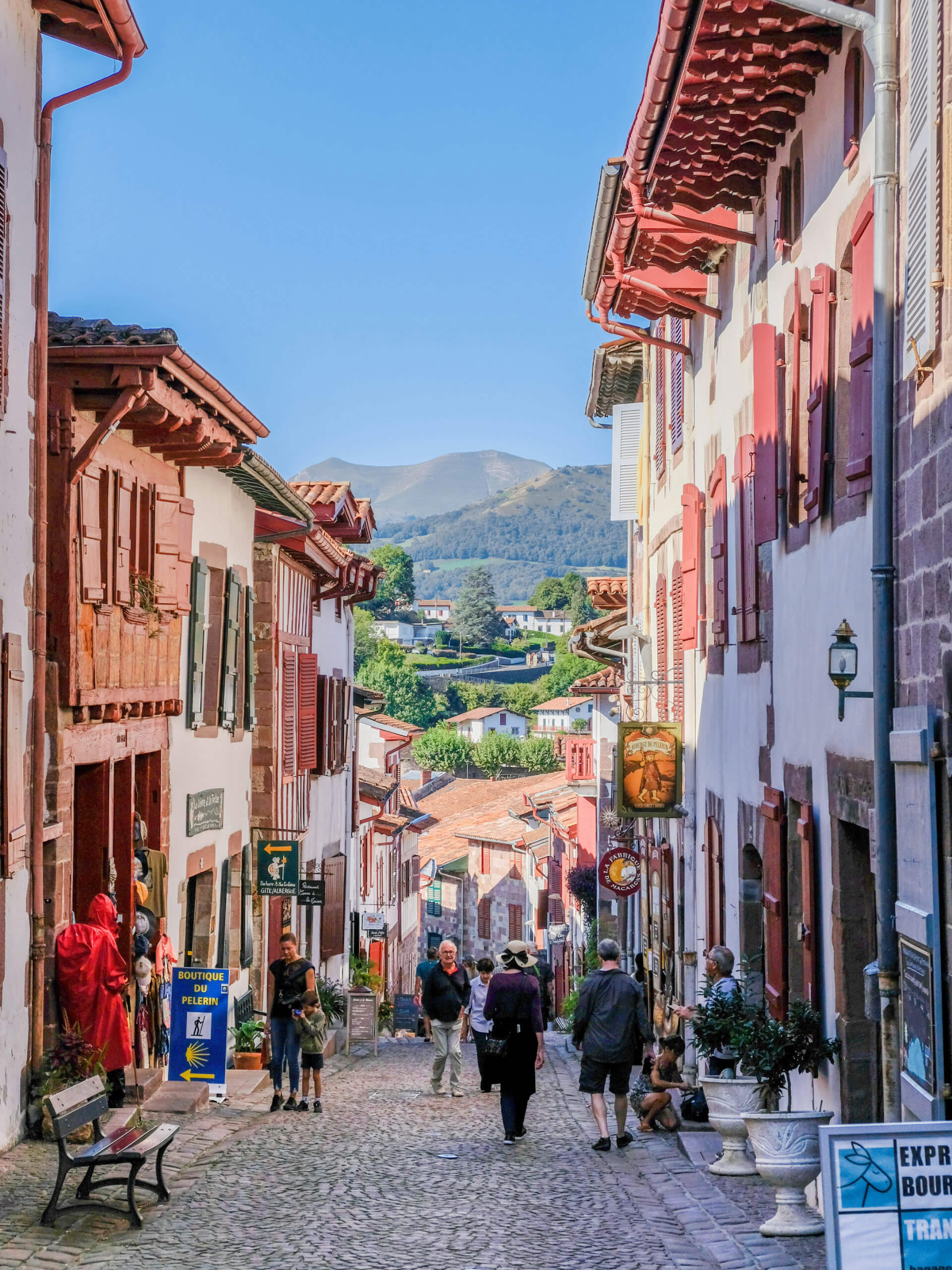
Today marks your final walking day. The route leads through the rural landscapes of the Basque Country before reaching the St James Gate and entering the medieval town of Saint-Jean-Pied-de-Port at the foothills of the Pyrenees.
Set along the River Nive, this small border town is lively with pilgrims, as it serves as the starting point of the French Way to Santiago de Compostela. Saint-Jean-Pied-de-Port has long been an important stop along the Way of St James, located at the base of the Roncevaux Pass that crosses the Pyrenees. Its name, Pied-de-Port, means “foot of the pass” in Pyrenean French.
Overnight Location: Hotel in Saint-Jean-Pied-de-Port
Distance: 22.5 km, 397m ascent, 387m descent
Meals: Breakfast
Day 39 Departure Day
Your Camino journey concludes after breakfast in the charming village of Saint-Jean-Pied-de-Port.
Overnight Location: None
Distance: None
Meals: Breakfast
2026 Pricing for Walk the Complete Le Puy Camino
The departures are available from April 1 to October 31, 2026
Accommodation on Walk the Complete Le Puy Camino
This tour is based in charming bed & breakfasts, gîtes and small local hotels along the Camino route. Accommodations are comfortable and authentic, chosen for their welcoming atmosphere and regional character.
In some cases, the accommodation listed below may need to be substituted for other comparable accommodations.
Single Rooms and Solo Travellers
Standard rooms are double occupancy. You can pay a supplement to have a private room in a hotel where possible. Solo travellers may be required to pay a supplement.
What’s Included in the Walk the Complete Le Puy Camino?
Meals
38 breakfasts and 30 dinners are included.
Accommodations
Accommodations for 38 nights are included. Accommodations before the tour are not included but can be added as a supplement.
Transportation during the Tour
Transportation for your luggage is included throughout the tour.
Also Included
- Digital detailed route notes and maps in English
- Digital guidebook and navigation app
- 24-hour telephone assistance
Not included
- Flights
- Meals, drinks, or snacks not previously mentioned
- Any personal transport
- Tourist Tax
- Transfer to first/ from last accommodation
- Travel insurance
- Personal expenses such as drinks, phone calls, tips, extra transfers, etc.
Optional Extras
- Additional nights before or after the tour
- Single occupancy upgrades
- Optional activities or excursions
- Shipment of printed documents to the first accommodation
- How hard is the Walk the Complete Le Puy Camino?
- Do I need a visa to travel to France?
- Are meals included on the Walk the Complete Le Puy Camino?
- Do I need insurance?
- How do I get to Le Puy-en-Velay to start this tour?
- Where does the Walk the Complete Le Puy Camino end?
- Do I need special vaccines to travel to France?
- Are there any travel restrictions for France?
We rate this tour as a 4 / 5. While the terrain is generally on good rural trails and rarely technical, the sheer endurance required to walk for over a month across diverse landscapes presents a significant physical and mental challenge. Daily stages typically range between 18 and 26 km, with occasional longer days reaching up to 30 km. From the volcanic climbs of the Massif Central and the expansive Aubrac plateau to the undulating ridges of the Basque Country, regular ascents and descents are to be expected. This is a demanding but deeply rewarding undertaking, best suited for experienced, well-prepared walkers looking for a definitive pilgrimage experience.
Check with your local country about visa requirements. You could also try this website, though you should verify with your government.
38 breakfasts and 30 dinners are included.
Yes, it is mandatory to have health and medical insurance to join this trip, and your insurance should cover walking. Get your travel insurance.
Fly into Lyon Saint-Exupéry Airport (LYS), the most convenient international hub. From Lyon, take a direct train or a train via Saint-Étienne to Le Puy-en-Velay (approx. 2–3 hours total). Alternatively, you can fly into Clermont-Ferrand Airport (CFE), which is closer but has fewer connections. From there, take a train or bus to Le Puy-en-Velay (around 2 hours). You can arrange your own private transfer from the airport to your first accommodations or book a private transfer as a supplement in advance during the booking process.
The tour ends in Saint-Jean-Pied-de-Port, a historic Basque town at the foothills of the Pyrenees and the traditional gateway to the French Way of the Camino de Santiago.
Check with your family doctor.
Please check with your local government about travel restrictions before you book your tour. This map from the US Department of State provides an overview of the current status in countries around the globe. The UK‘s Foreign Office and Government of Canada also provide advice on foreign travel. Note that the travel advice may change depending on your nationality.
Customer Ratings


With 25 years of experience running walking and biking tours in France, S-Cape France has a team full of energy and fresh ideas. Their multinational team can assist in various languages, and their large collection of itineraries means you’ll be able to find your dream adventure in France.